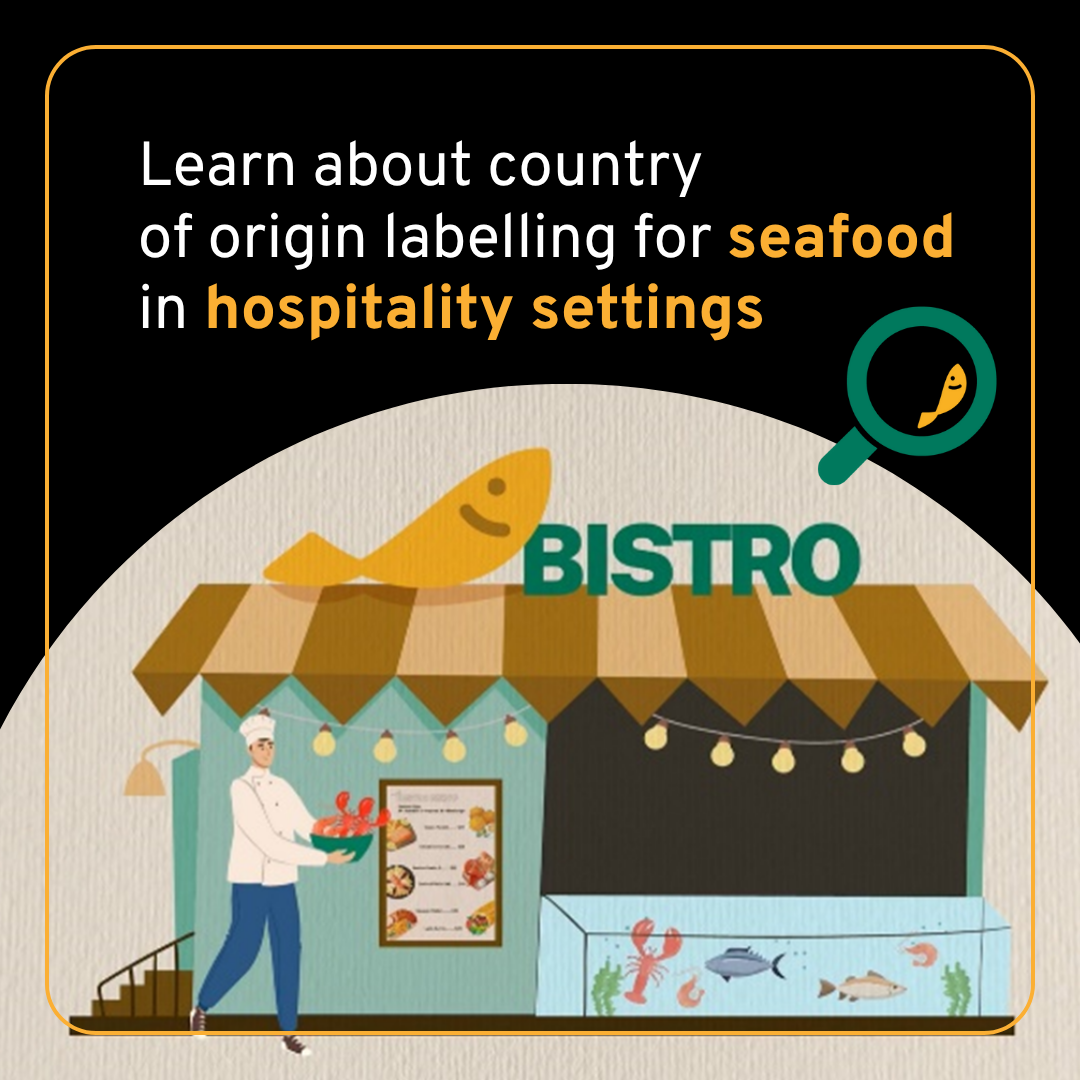

[Music starts. A cartoon picture of a cafe appears. The word ‘Bistro’ and a large fish are mounted on the roof of the building. Lights are strung across the front of the building and there is a fishtank containing a lobster, prawn and 2 other fish. There is a menu on the front wall. A chef wearing blue trousers and a white chef’s coat and hat enters from the left. They are smiling and holding a bowl of lobsters and prawns.]
Narrator: Food labelling rules for seafood in the hospitality industry are changing.
[We zoom in on the menu, which has images, names and prices of dishes.]
Narrator: Hospitality businesses will need to label all seafood dishes using the AIM model. The reason for using the AIM model is to show the origin of seafood.
[We shift to a close-up of the fish tank showing the fish, then zoom out to show a cartoon image of the world, with the fish moving to different locations around Australia and Asia.]
Narrator: Dishes containing seafood will need to be labelled with an A for Australian, I for imported or M for mixed origin.
[The menu reappears. A magnifying glass zooms in on individual menu items: Grilled Salmon (A), Seafood Paella (I) and Seafood Platter (M). Boxes pop out to explain what each letter stands for.]
Narrator: This labelling should be clearly visible on menus or display boards.
[An A-frame menu board appears showing a menu of dishes with the AIM labelling. It zooms out to show a man and a woman beside the board, which is outside a cafe. They both look curious and engaged. The woman is pointing to the board.]
Narrator: The changes will help customers make informed choices about the dishes they eat.
[The scene changes to 2 smiling people sitting at a table inside a restaurant and drinking red wine. One of them is holding a menu. A smiling waiter with a pen and pad is taking their order. On the wall behind them is a menu board showing dishes and prices.]
Narrator: For more information about the new information standard, the transition period and to access guidance materials, visit business.gov.au/seafoodlabels.
[A magnifying glass zooms in on a poster with a lobster and some text on it. It moves over boxes showing ‘A = Australia’, ‘I = Imported’ and ‘M = Mixed origin’. It then moves over a QR code and zooms in further to highlight the words ‘Find out more at business.gov.au/seafoodlabels’.]
[The video ends with the Australian Government coat of arms. Music stops.]
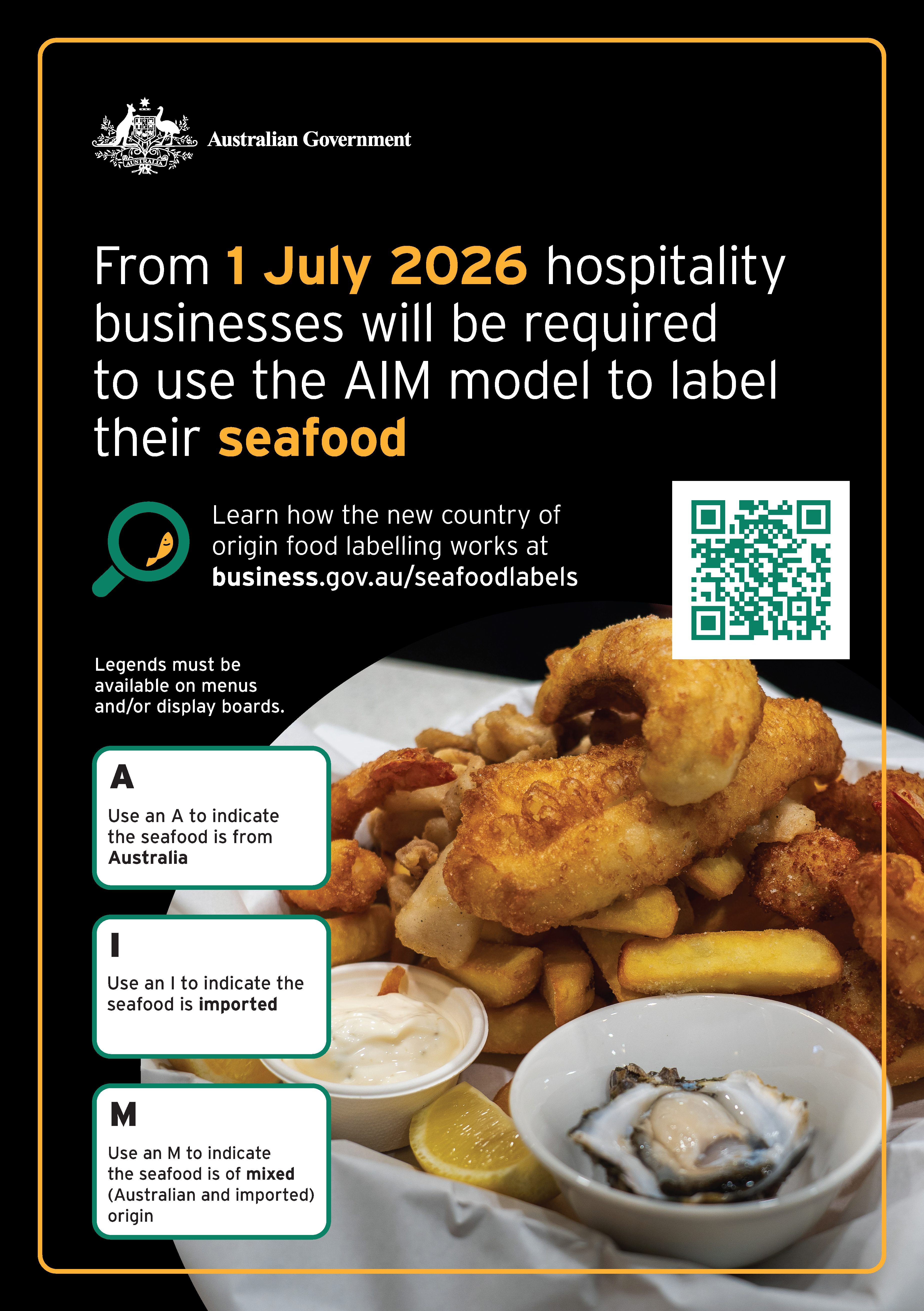
Australia’s hospitality businesses must label the origin of any seafood they serve from 1 July 2026, using the AIM model.
The labelling changes apply to most hospitality venues, including restaurants, cafes, takeaways, clubs, pubs, hotels and food trucks.
These changes will make it easier for consumers to be informed about what dishes contain Australian, imported or mixed sources of seafood.
Labelling applies to seafood dishes served for immediate consumption, regardless of where it’s consumed.
The AIM model
The AIM model involves adding a letter to each dish containing seafood, using an
- (A) for Australian
- (I) for imported
- (M) for mixed origin
The AIM model is the simplest option and received the highest level of support from affected users. It makes the labelling consistent and reliable, while minimising the burden on businesses.
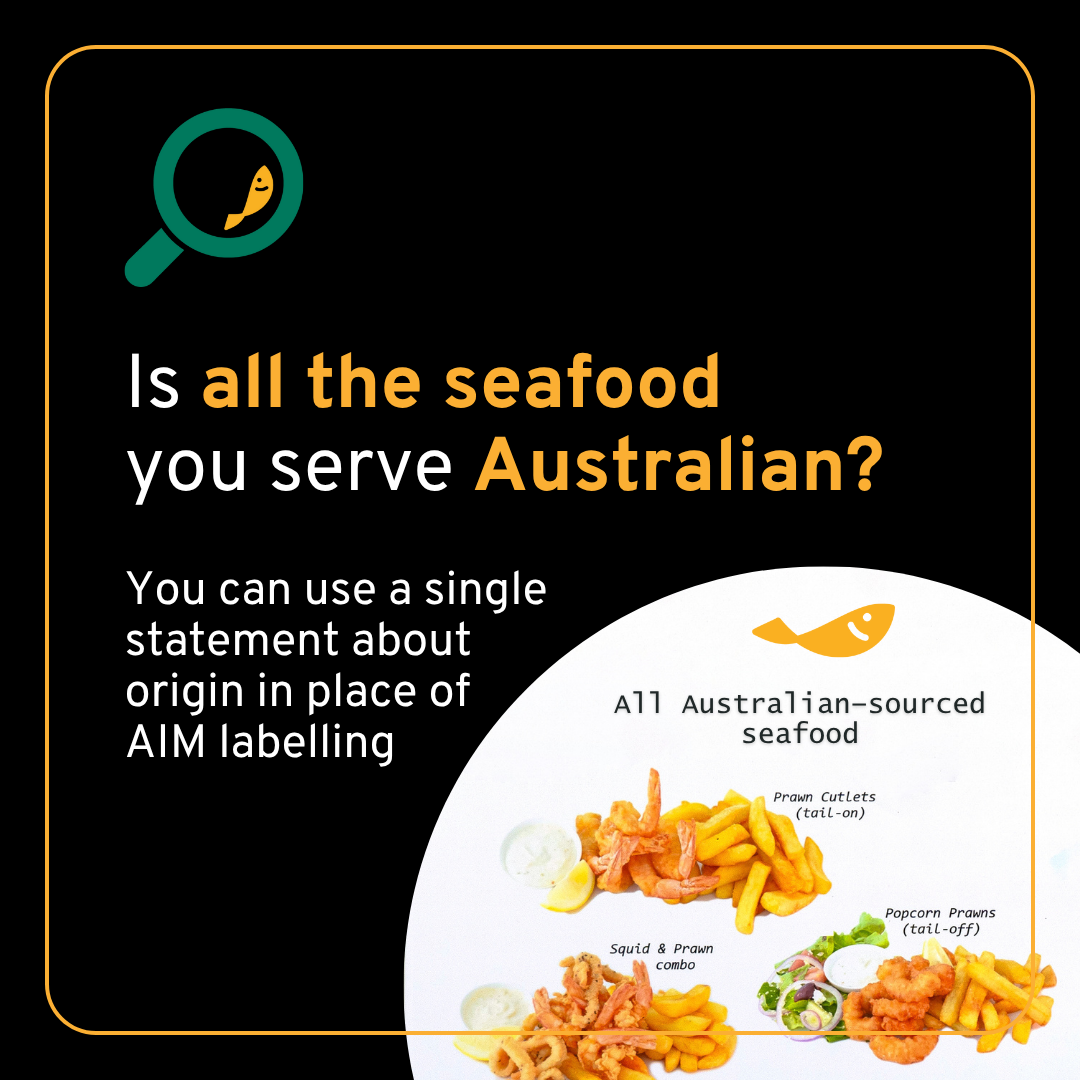
If preferred, businesses can use more detailed text instead of a single letter. The text must include the word ‘Australian’, ‘imported’ or ‘mixed’. For example:
- Australian seafood
- imported seafood
- contains seafood of mixed origin.
To check if labelling applies to your business and how to comply with the law, see www.business.gov.au/seafoodlabels.
Read the official seafood labelling rules in the information standard and explanatory statement.
More articles include:
- Answering your seafood labelling questions
- Some of the options in labelling your seafood
- Do you run a food truck
- Posters - supporting seafood labelling
- New laws for hospitality businesses start 1 July 2026
- Supplying seafood to hospitality businesses
Resources
Other useful details about labelling seafood in hospitality businesses, along with posters and example menus can help demonstrate the requirements to hospitality members and venue staff.
Translated one page fact sheets are available in 10 languages.
Social media tiles and other downloadable images are available below to support information sharing with industry and
Downloadable content
- Posters and example menus - multiple printable options
- Newsletter banner image - CoOL seafood platter
- Seafood platter image - landscape
- Seafood platter image - square
- Social tile - for hospitality 1
- Social tile - for hospitality 2
- Social tile - for hospitality 3
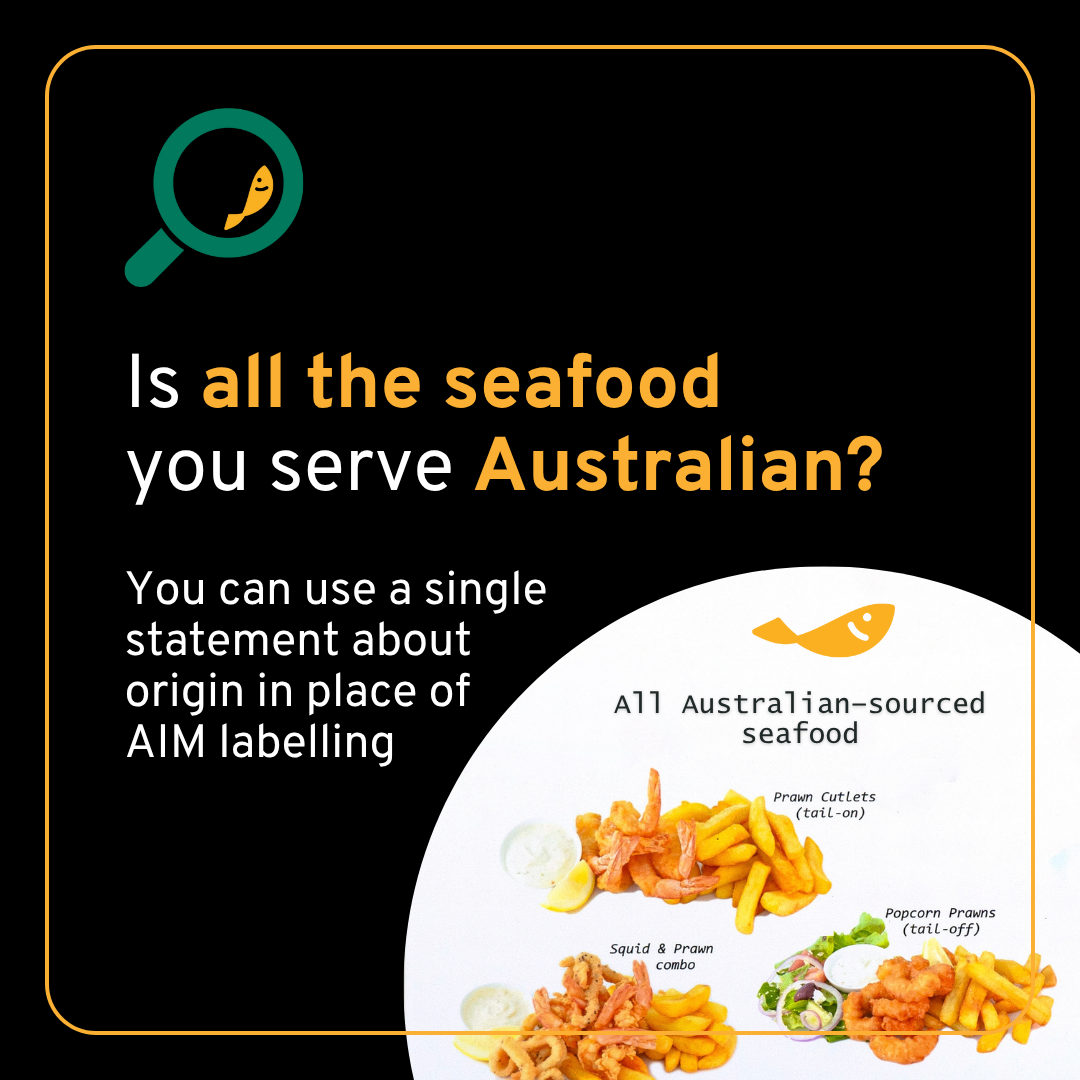
- Social tile - is all the seafood Australian?
- Social tile - still from animation